How Cooking Methods Change the Nutrients in Your Food
Most nutrition advice stops at the shopping list. Buy the spinach, buy the broccoli, buy the carrots, and the job is apparently done. What happens between the shopping bag and the plate rarely gets a mention, which is odd, because it can make a substantial difference to what you actually absorb.
Cooking is not simply a matter of making food edible and pleasant. It changes the chemistry of what you’re eating. Some nutrients are fragile and leach away in hot water. Others become dramatically more available once heat breaks down the cell walls holding them. The same vegetable, prepared two different ways, can deliver noticeably different nutrition.
None of this means you need to overhaul how you cook. It mostly means a few small adjustments — keeping a lid on, using less water, saving the cooking liquid — give you more of what you already paid for. If you want to know what you’re actually aiming for in the first place, a DRI calculator will show your daily targets for vitamins and minerals, which makes these adjustments feel less abstract.
Here’s what heat, water, and time actually do to your food.
The Two Types of Vitamins Behave Completely Differently
The single most useful thing to understand is that vitamins fall into two camps, and they respond to cooking in opposite ways.
Water-soluble vitamins — vitamin C and the B vitamins, including folate — dissolve readily in water and degrade with heat. These are the vulnerable ones. Boil a vegetable and a meaningful proportion of its vitamin C can end up in the water, which most people then pour down the sink.
Fat-soluble vitamins — A, D, E, and K — behave quite differently. They’re stable under heat and don’t dissolve into cooking water. They do, however, need dietary fat to be absorbed properly, which is why a plain steamed carrot delivers less usable vitamin A than the same carrot cooked with a little olive oil.
That distinction explains most of the practical advice that follows.
Boiling: The Method That Loses the Most
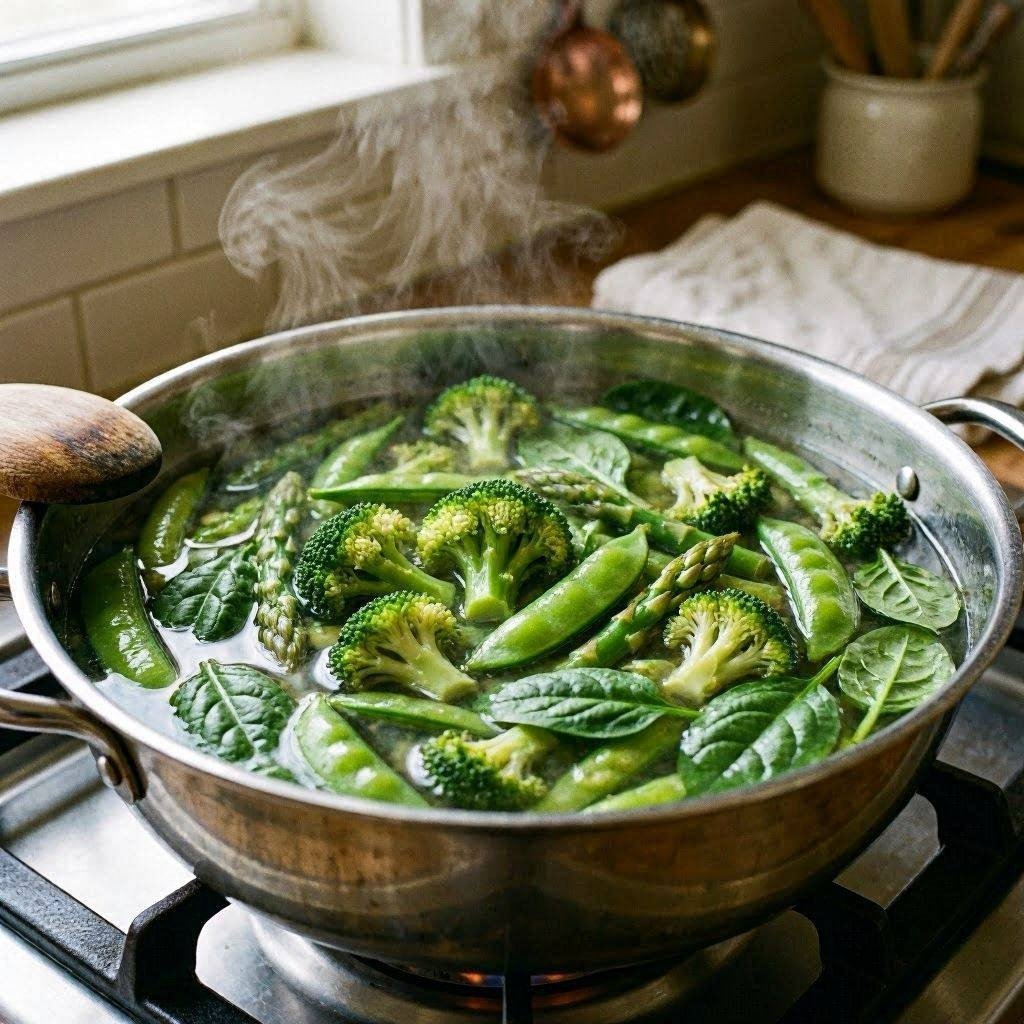
Boiling is the hardest method on water-soluble vitamins, for the obvious reason that the nutrients have somewhere to go. Depending on the vegetable and how long it’s cooked, a substantial share of vitamin C and folate can transfer into the water.
This doesn’t make boiling wrong. It makes it wasteful if you discard the water. If you’re boiling vegetables for a soup or a stew, the nutrients stay in the dish and nothing is lost. The problem is specifically boiling vegetables in a large pot and draining them.
Two easy fixes: use the smallest amount of water that will do the job, and cook for the shortest time that gets the texture you want. Both reduce losses considerably.
Steaming and Microwaving Preserve More Than You’d Expect
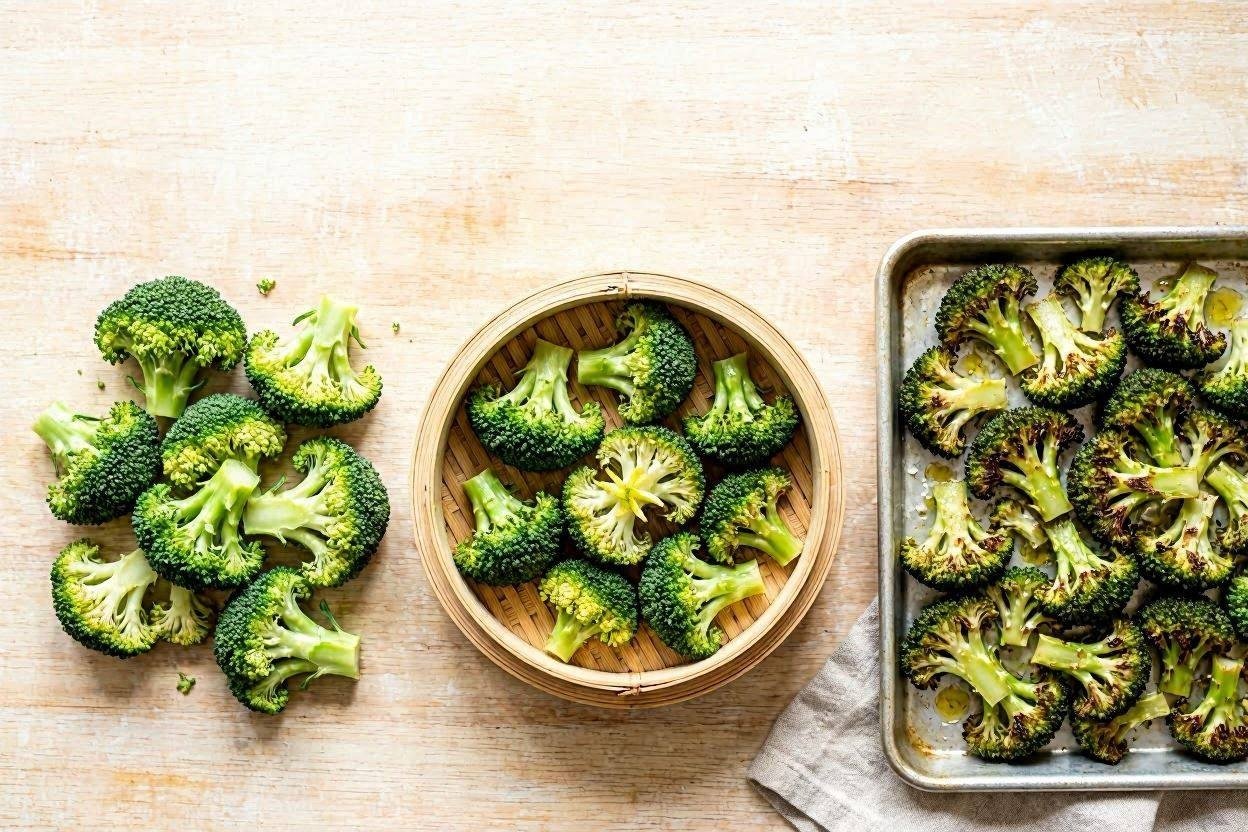
Steaming keeps food out of direct contact with water, so far less leaches away. It’s consistently among the better methods for retaining water-soluble vitamins in vegetables.
Microwaving surprises people, but it performs well for the same reason: short cooking times and minimal added water. The reputation microwaves have for destroying nutrients doesn’t hold up particularly well — the speed often works in their favour, since less time at heat means less degradation.
For most green vegetables, brief steaming or microwaving with a splash of water retains more than a long boil.
Some Foods Are Better Cooked Than Raw
The assumption that raw is always more nutritious is one of the more persistent misconceptions in food, and tomatoes are the standard counterexample. Cooking tomatoes increases the availability of lycopene, the antioxidant that gives them their colour, because heat breaks down the cell walls that would otherwise keep it locked away.
Carrots behave similarly with beta-carotene. Cooking softens the plant structure and makes the carotenoids easier for the body to extract. Spinach and other leafy greens release more of certain minerals when cooked, partly because heat reduces some of the compounds that bind them.
So the honest answer to “raw or cooked?” is that it depends on the vegetable and the nutrient. A varied approach — some raw, some cooked — covers more ground than committing to either extreme.
Fat Isn’t the Enemy of Vegetables
Since fat-soluble vitamins need fat to be absorbed, cooking vegetables with a small amount of oil genuinely improves what you get from them. A salad with an oil-based dressing delivers more usable vitamin A, E, and K than the same salad eaten dry.
This is one of the more useful practical points in the whole topic, and it runs directly against a decade of fat-free dressing marketing. A modest amount of olive oil on roasted vegetables isn’t undoing the health benefit; it’s part of the mechanism.
What About Meat, Fish, and Eggs?
Protein foods behave differently again. Cooking actually improves protein digestibility — heat denatures proteins, which makes them easier for digestive enzymes to break down. A cooked egg delivers substantially more usable protein than a raw one.
The trade-off is at the high end of temperature. Very high heat, particularly charring and prolonged grilling of meat, produces compounds that are best not consumed in large quantities. Gentler methods — poaching, braising, roasting at moderate temperatures — avoid that while still getting the digestibility benefit.
For oily fish, the omega-3 content holds up reasonably well under gentle cooking but degrades with prolonged high-temperature frying. Baking or pan-searing briefly preserves more than deep-frying.
Practical Rules That Cover Most Situations
None of this requires a chemistry degree in the kitchen. Five habits capture most of the benefit.
Use less water and shorter cooking times for vegetables. Keep the lid on, which speeds cooking and reduces exposure to air. Save cooking liquid where it makes sense, folding it into sauces, soups, or gravies rather than draining it away. Add a little fat to vegetables, especially the colourful ones. And cut vegetables into larger pieces where practical, since less surface area means fewer nutrients escaping.
Do those things and you’ll retain noticeably more from the same shopping basket.
See also: Navigating Perimenopause Without Losing Yourself in the Process
Frequently Asked Questions
Does microwaving destroy nutrients?
Not particularly, and it often preserves more than boiling. The short cooking time and small amount of added water both work in its favour. The idea that microwaves are uniquely destructive doesn’t match the evidence.
Is raw food more nutritious than cooked?
Sometimes, but not always. Raw preserves vitamin C and folate better, while cooking makes lycopene in tomatoes and beta-carotene in carrots more available, and improves protein digestibility. A mix of both is more sensible than committing to one.
Should I keep the water I boil vegetables in?
If you can use it, yes. The water-soluble vitamins that leached out are still in there. Using it as a base for soup, stock, or gravy recovers what would otherwise go down the drain.
Does frozen produce lose nutrients in cooking?
No more than fresh, and frozen vegetables often start from a higher baseline since they’re frozen soon after harvest. Cook them the same way — briefly, with minimal water.
Final Thoughts
The gap between what you buy and what you absorb is wider than most people realise, and cooking method is a large part of it. Water-soluble vitamins leach and degrade; fat-soluble ones need fat to be absorbed; and several plant compounds become more available with heat rather than less.
The adjustments are small — less water, less time, a lid, a little oil, and saving the cooking liquid when you can. They cost nothing and recover a meaningful amount of nutrition from food you’ve already bought. And if you’re not sure how much of each vitamin and mineral you’re actually aiming for, the free DRI calculator gives you personalised daily targets in a couple of minutes. .